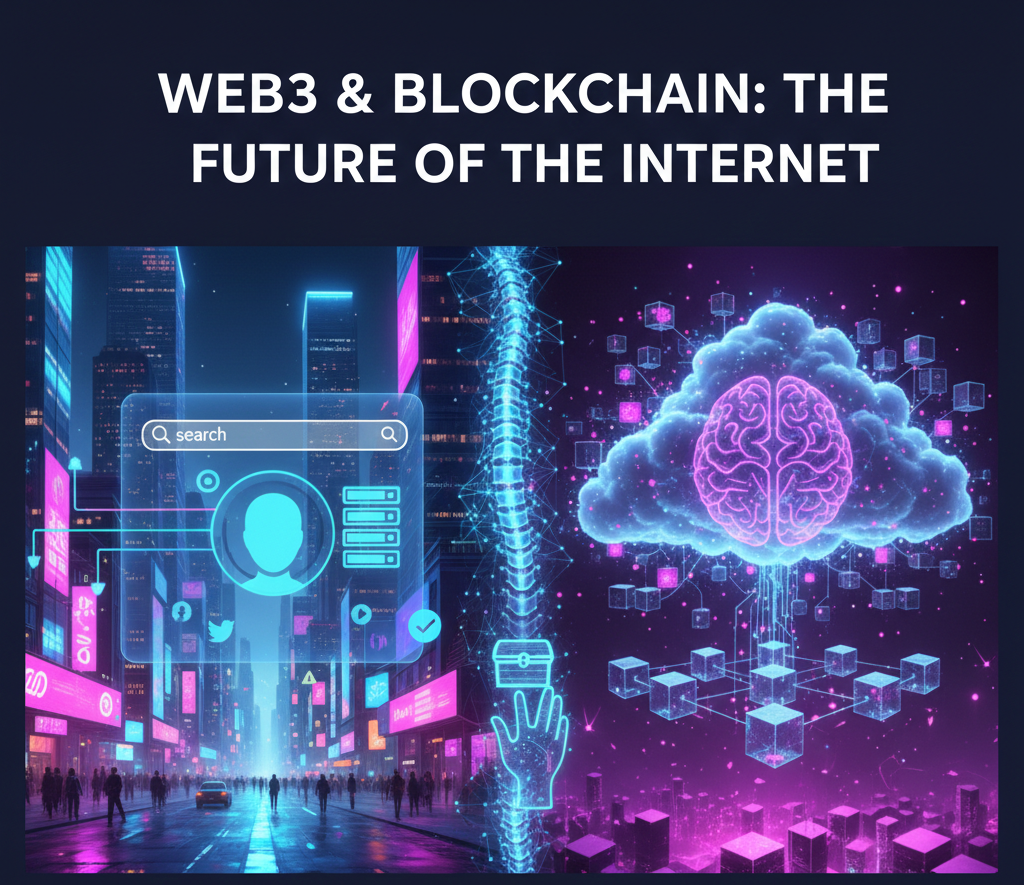
Today’s digital environment is experiencing the biggest change from the day the invention of the World Wide Web. For years, we’ve been breathing in the era of Web2 (the “social web”), characterized by centralized platforms, data collection, and a balance between convenience and privacy. However, as 2026 approaches, the transition to Web3 has reached its peak.
In essence, Web3 represents a fundamental paradigm shift: from an Internet of “information” to an Internet of “value.” This transition is made possible by blockchain technology, a distributed decentralized ledger system that delegates digital ownership, transparency, and trusted transactions. In this guide, we explore the complex relationship between Web3 and blockchain, its real-world applications, and why this development is critical to the future of the global economy.
Understand the basics: Web1 to Web3
To understand where we are going, we need to take a quick look at where we have been. The Internet has progressed through three distinct periods defined by how users interact with data.
Web1: read-only (1990-2004)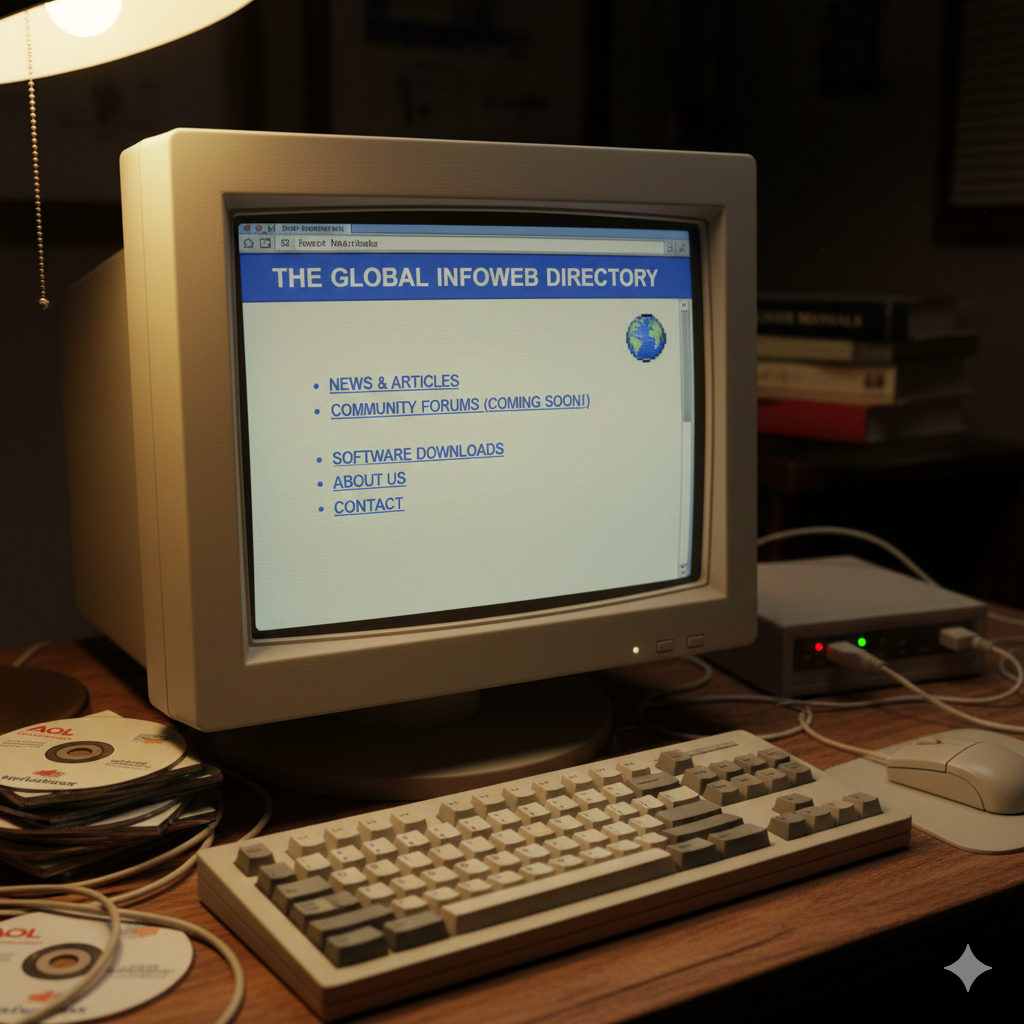
Web1 was the “static web”. It consisted of simple HTML pages that allowed users to read information but with little interaction. There were no social media platforms or comment sections. It was a digital library.
Web2: Reading and Writing (2004-present)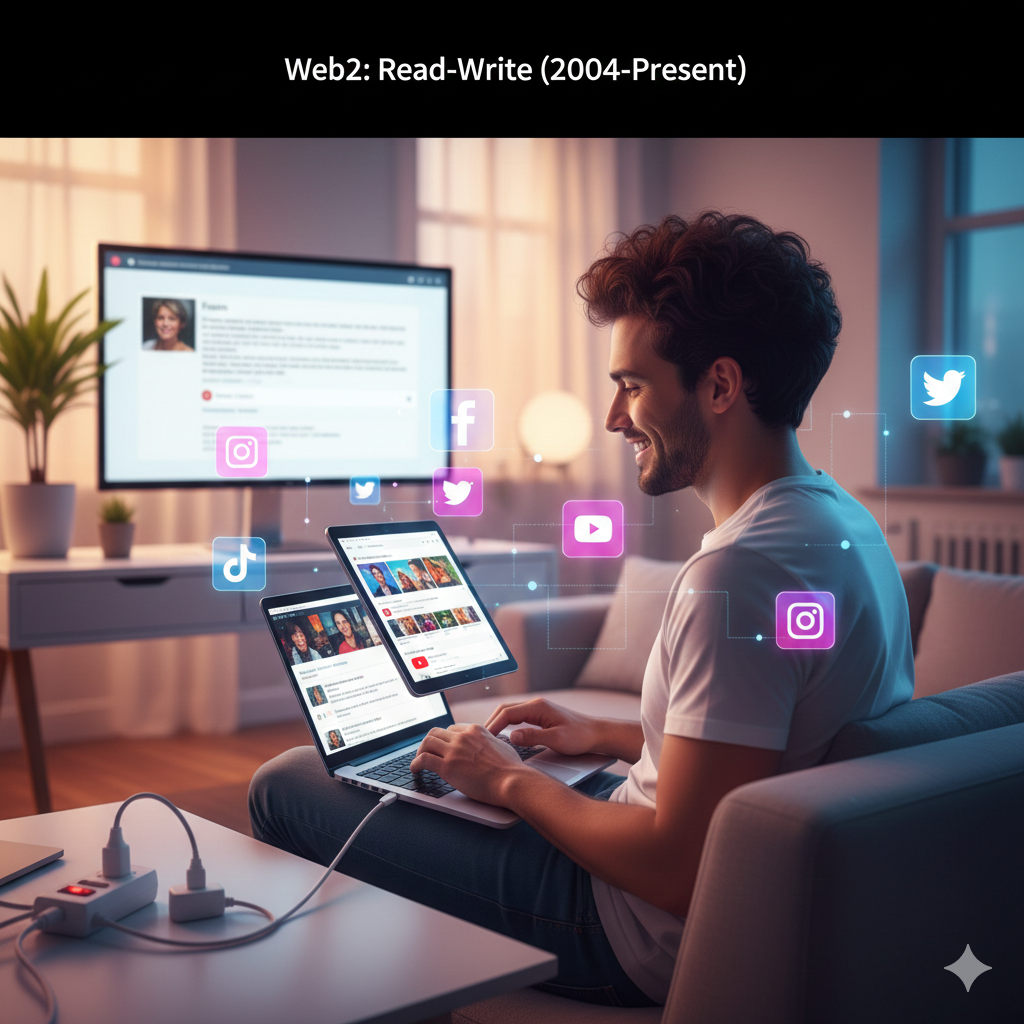
Web2 brought us the “participatory web.” Users became creators and uploaded content to platforms such as YouTube, Facebook, and Instagram. But this era was defined by centralization. Several large technology companies own the servers, manage the data, and profit from user information. Web3: read-write properties (future)
Web3 is the “decentralized web.” 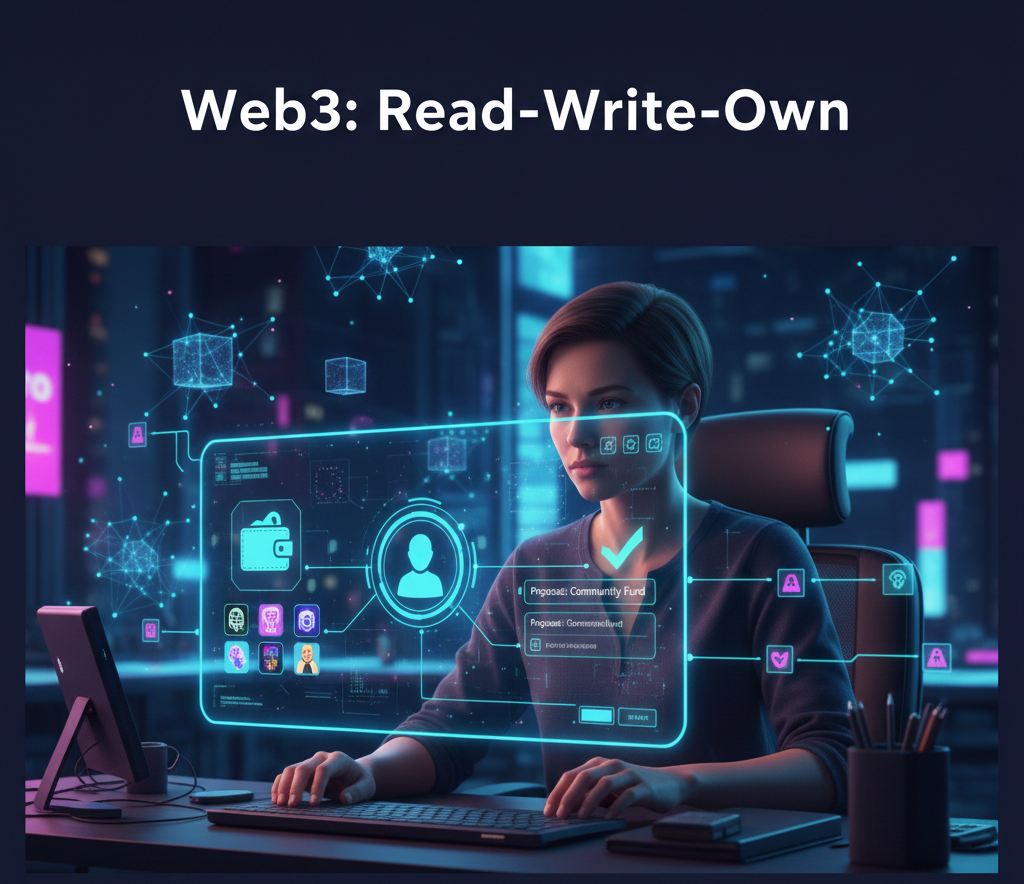
Built on a blockchain network, Web3 allows users not only to read and write data but also to own assets and digital identities. In Web3, power shifts from centralized companies to individual users and community-driven protocols. How Blockchain Powers the Web3 Ecosystem
Blockchain is the engine room of the Web3. Without the unique properties of the blockchain, we would not see a decentralized internet. There are four main blockchain pillars that define the Web3 experience:
1. Decentralization
In today’s Internet, if a server at a major cloud provider goes down, half the Internet could be shut down. Blockchain works on a peer-to-peer (P2P) network. Thousands of nodes around the world maintain a single ledger. This means there is no single point of failure and no central authority to censor or control data.
2. Transparency and immutability
All transactions in the blockchain are publicly recorded and cannot be changed or deleted. This “immutability” creates a level of trust never before possible online. By 2026, it is expected to be used in everything from luxury product certification to real-time tracking of global supply chains.
3. Smart contract
A smart contract is a piece of code that automatically executes and triggers an action when certain conditions are met. For example, a smart contract automatically pays a freelance designer after uploading the final file. This reduces costs and improves efficiency by eliminating the need for “middlemen” such as banks or escrow services.
4. Digital sovereignty
In the Web2 world, your digital identity (“profile”) belongs to the platform. Web3 uses cryptocurrency wallets as universal identifiers. Own your data, subscribers, and assets, and move them seamlessly between apps.
The practical application of Web3 in 2026
Web3 has expanded far beyond its original responsibilities of “digital art” and speculative trading. We now solve real-world problems in a variety of domains.
Decentralized Finance (DeFi)
DeFi is probably the most mature domain in Web3. This allows users to borrow, lend, and trade assets without traditional banking. Blockchain-based protocols allow users to earn higher profits and access financial services previously only available to institutional investors. The evolution of gaming: Play to find, enjoy and own
The gaming industry was revolutionized by Web3. Players no longer “buy” in-game items. I hold them as NFTs (fungible tokens). If you find a rare sword in the game, you can sell it for real money on the secondary market or, in some cases, trade the item for another game entirely.
Decentralized Autonomous Organization (DAO)
The DAO is a community-driven organization with no central leadership. Decisions are made by suggestions and votes from token holders. DAOs can be used to manage investment funds, manage open source software, and even run charities, providing a democratic way to manage collective resources. Challenges and the way forward
Despite the progress made in 2026, the transition to Web3 will not be without obstacles. For blockchain technology to reach its full potential, several key areas must continue to evolve. Scalability and energy efficiency
Early blockchains suffered from slow transaction speeds and high power consumption. However, the move to Proof of Stake (PoS) and the development of layer 2 scaling solutions (eg stacking) have significantly reduced carbon emissions and increased the speed of blockchain networks, making them viable for the mass market. User Experience (UX)
For ordinary people, Web3 still feels “challenging”. Managing private keys and understanding gas costs are barriers to entry. The next phase of Web3 development focuses on “account abstraction,” making blockchain applications as easy to use as logging in with an email address and password while maintaining decentralized security. regulatory environment
Governments around the world are still catching up with blockchain. In 2026, we will see a stronger framework to protect consumers from fraud without compromising the innovation that Web3 provides. More specific regulations would actually benefit the industry by initiating “rules of the road” for institutional adoption.
Conclusion: Why Web3 is inevitable
The transition to Web3 is driven by the growing demand for transparency, security and digital ownership. If Web2 is about connecting people, Web3 is about empowering people. Using blockchain technology, we are building a fairer internet where value is distributed to those who create it, not those who provide it.
Commonly Asked Questions (CAQs)
1. Do I need to be a programmer to use Web3?
Not at all. While the underlying technology is complex, modern Web3 applications (dApps) are designed to be user-friendly. Most users only need a digital wallet to get started.
2. Is blockchain the same thing as Cryptocurrency?
No. Blockchain is the technology (the ledger), while cryptocurrency is a digital asset that often runs on that technology. Think of blockchain as the internet and Bitcoin as email—one is the infrastructure, and the other is an application built on it.
3. What makes Web3 more secure than the current internet?
Web2 relies on central databases, which are “honeypots” for hackers. If a central server is breached, millions of users’ data is compromised. Because blockchain is decentralized and encrypted, there is no single target for a hacker to attack, making the system much more resilient.
4. Can Web3 be censored?
Because Web3 runs on decentralized networks of thousands of independent nodes, it is incredibly difficult for any single government or corporation to shut down a protocol or censor specific content. This makes Web3 a vital tool for freedom of information.
5. What are Gas Fees?
Gas fees are small payments made by users to compensate the network participants (validators) for the computing power required to process and validate transactions on the blockchain. In 2026, these fees have become significantly lower thanks to Layer 2 technologies.
