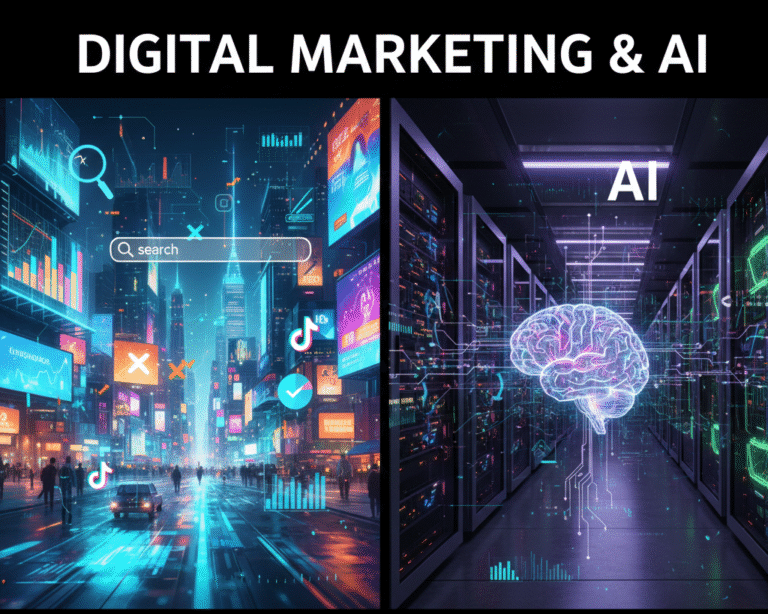
In the hyper-competitive world of Software as a Service (SaaS), the landscape of 2026 is no longer about who has the most features, but who can build the most trust. With global SaaS spending reaching nearly $300 billion, the industry has shifted from a “growth at all costs” mentality to a focus on sustainable, relationship-driven revenue.
For SaaS companies, digital marketing is unique because the “sale” is just the beginning. Unlike traditional retail, where a transaction ends the journey, a SaaS conversion is the start of a long-term subscription relationship. This article explores the essential digital marketing strategies for SaaS in 2026, focusing on how to attract, convert, and retain customers in an AI-driven, privacy-conscious market.
1. The Shift to Answer Engine Optimization (AEO)
For years, Search Engine Optimization (SEO) was about ranking blue links on a results page. In 2026, the rise of AI-powered engines like ChatGPT, Perplexity, and Gemini has introduced a new challenge: Answer Engine Optimization (AEO).
From Keywords to Context
Traditional SEO focused on “best CRM for small business.” Today, buyers ask complex questions: “Which CRM integrates with Slack, supports usage-based pricing, and has the best data privacy ratings?” To stay visible, SaaS companies must create content that directly answers these multi-layered queries.
Optimizing for AI Discovery
AI models favor structured data and authoritative, fluff-free information. To win at AEO, your technical documentation, API guides, and use-case libraries must be easily crawlable and highly specific. The goal is no longer just to get a click; it is to be the “source of truth” that the AI cites when answering a user’s prompt.
2. Leveraging Agentic AI in Marketing Operations
The “AI revolution” in marketing has moved beyond simple chatbots. In 2026, we are seeing the rise of Agentic AI—autonomous systems that can plan, execute, and optimize entire marketing workflows with minimal human oversight.
Autonomous Campaign Management
Modern SaaS marketing teams use AI agents to handle repetitive, low-stakes tasks. This includes:
-
Dynamic Budget Allocation: Automatically shifting ad spend from underperforming LinkedIn campaigns to high-intent Google Ads in real-time.
-
Predictive Lead Scoring: Using live intent signals and behavioral data to prioritize leads that are most likely to convert within the next 30 days.
Maintaining the Human Touch
While AI handles the “heavy lifting” of data processing, human judgment remains critical for high-stakes work. Your brand voice, core narrative, and unique positioning cannot be outsourced to a machine. The most successful SaaS companies use AI as an accelerant, not a replacement for creative strategy.
3. The Power of Product-Led Growth (PLG) and Free Tools
In 2026, the barrier to entry for software is lower than ever, making the “try before you buy” model essential. Product-Led Growth (PLG) uses the product itself as the primary vehicle for customer acquisition and expansion.
Free Tools as Lead Magnets
Successful SaaS brands like Shopify and HubSpot have mastered the art of the free tool. By offering a “mini-version” of your software that solves a specific problem—like an ROI calculator or a website speed tester—you build immediate value and collect first-party data.
Reducing Friction in the Funnel
To optimize a PLG strategy, you must:
-
Eliminate Credit Card Barriers: Requiring a credit card for a free trial is a major friction point that repels modern buyers.
-
Shorten Time to Value (TTV): Ensure users experience a “Eureka moment” within minutes of signing up. If your onboarding is too complex, they will churn before they ever see the product’s worth.
4. Modern Pricing Models: Beyond the Flat Monthly Fee
Pricing is often overlooked as a marketing lever, but in 2026, it is a primary differentiator. The “one size fits all” subscription model is being replaced by more flexible structures that align cost with value.
Usage-Based and Hybrid Pricing
Many SaaS companies have moved toward usage-based (consumption) pricing. This allows smaller startups to start cheap and scale their costs as they grow, while enterprise clients pay for exactly what they use. Hybrid models—a base fee plus usage tiers—are becoming the standard for 2026.
Transparency as a Trust Asset
In an era of “subscription fatigue,” transparency is a competitive advantage. SaaS companies that clearly communicate their pricing—including potential cost increases and easy cancellation policies—build significantly higher levels of long-term loyalty.
5. Building Community and Employee Advocacy
Buyers in 2026 are increasingly skeptical of corporate messaging. Instead, they look to peer recommendations and expert voices.
The Rise of Practitioner-Creators
Traditional influencers are being replaced by Practitioner-Creators—actual users or engineers who share raw, unfiltered insights about the products they use. SaaS companies are now partnering with these experts to reach niche Slack communities, Discord servers, and Subreddits where high-intent conversations happen.
Employee Advocacy
Your employees are your most credible brand ambassadors. When a Lead Engineer shares a “behind-the-scenes” post on LinkedIn about how they solved a technical challenge, it generates more trust than any polished corporate ad ever could. Encouraging your team to build personal brands is no longer a luxury; it is a core marketing strategy.
6. Measuring SaaS Marketing Success
Traditional metrics like “total traffic” or “number of leads” are secondary in 2026. High-performing SaaS teams focus on metrics that reflect the health of the subscription engine.
Conclusion
Digital marketing for SaaS in 2026 is a balancing act between cutting-edge technology and human-centric strategy. While AI agents and AEO provide the efficiency and visibility needed to compete, it is the focus on community, transparent pricing, and genuine value that ultimately builds a sustainable brand.
By shifting your focus from “acquiring customers” to “building relationships,” you can navigate the complexities of the modern market and turn users into lifelong advocates for your software.
Frequently Asked Questions (FAQs)
1. What is the difference between SEO and AEO for SaaS?
SEO (Search Engine Optimization) focuses on ranking on search engine result pages to get clicks to your website. AEO (Answer Engine Optimization) focuses on making your content the primary source for AI-generated answers in conversational tools like ChatGPT or Gemini.
2. Is the “Free Forever” model still effective in 2026?
Yes, but it must be managed carefully. A “Freemium” model works best when the free tier offers enough value to be useful but creates a logical bridge to paid features as the user’s needs scale.
3. How does usage-based pricing impact digital marketing?
Usage-based pricing allows marketing to target a broader audience with a “low-entry” message. It shifts the marketing focus toward customer success and product adoption, as revenue increases only when the customer actually uses the software more.
4. Why is employee advocacy more effective than brand posts?
Audiences in 2026 value authenticity. People trust other people more than they trust logos. A post from a real person sharing their expertise feels more like a recommendation and less like an advertisement.
5. What is the most important metric for a growing SaaS company?
While acquisition is important, Net Revenue Retention (NRR) is arguably the most critical. It proves that your product is sticky enough to keep customers and valuable enough for them to spend more over time.
